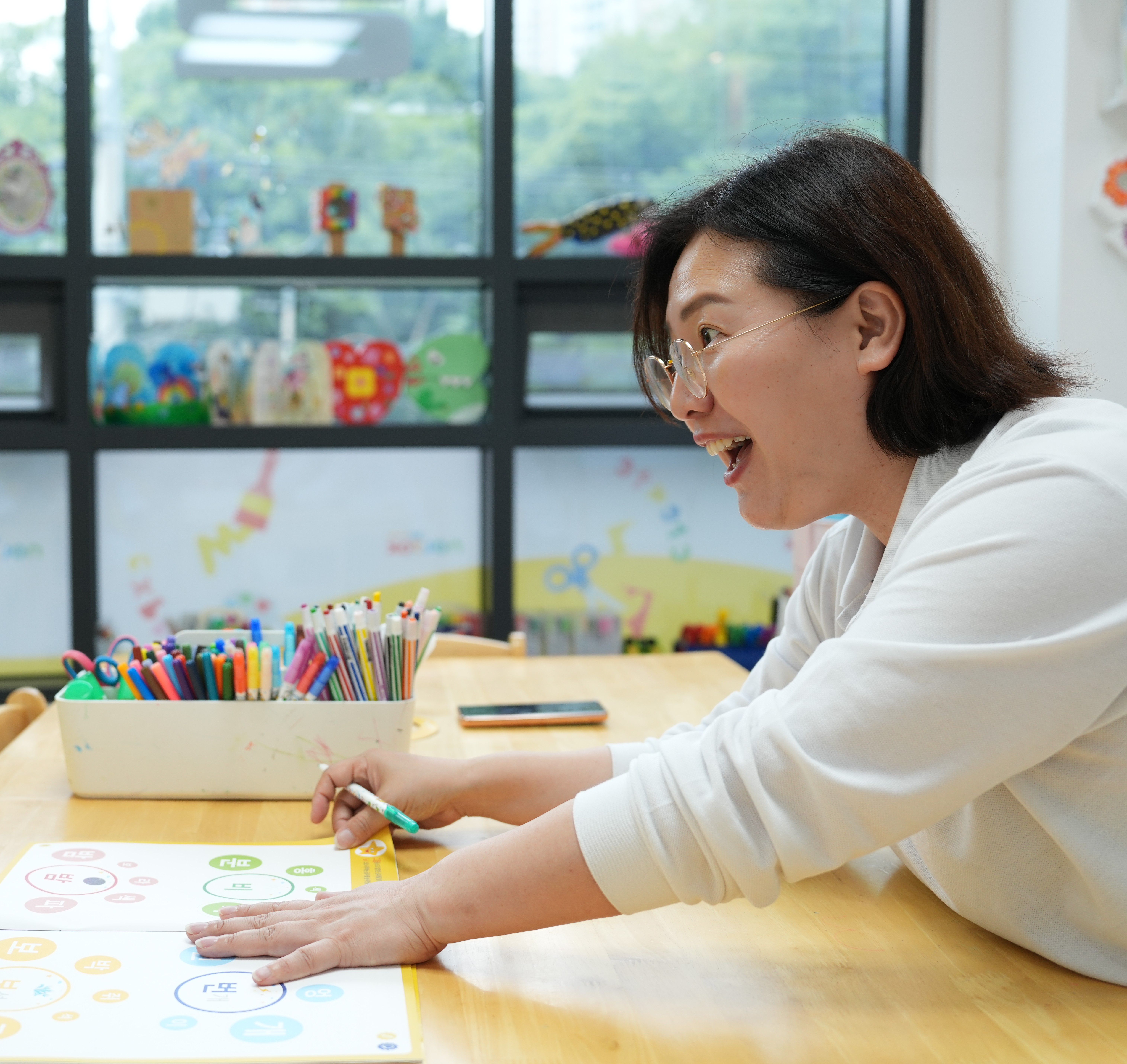
Founder
SunKyung Jang
Noljak Art Education Research Institute
30+ years in early childhood education. Developed every NOLJAK program — CreKiC, Basic, and Creator.
WHY NOLJAK
Why NOLJAK Began
For more than 25 years, I worked with children in early childhood education. My achievements as a public-school teacher and center director were deeply rewarding, but they also revealed clear limits. I came to believe that the purity of play, combined with the educational value of art, could unlock children's creativity. Education is about building the capabilities children need for their future — capabilities that come from thoughtful observation and confident, creative expression. To share this belief with more children, I launched NOLJAK in 2012.
Education
- M.Ed. in Early Childhood Education, Sejong University Graduate School of Education
- Completed Ph.D. coursework in Child Studies, Seoul Women's University
Career
- Certified Teacher, Kindergarten & Public Daycare Centers
- Director, Public Daycare Center
- Director, NOLJAK Art Education Research Institute (present)
From 1993 to today — more than 30 years by children's side as a hands-on educator.
Observation creates thinking, thinking creates expression, and expression completes growth — this is the conclusion Founder SunKyung Jang reached after 30 years in the field.
Publications
100 Art Activities for Toddlers (2011)
NOLJAK Creative Drawing: Basic (2012)
NOLJAK Creative Drawing: Advanced (2013)
Easy Guide to Daycare Center Accreditation (2014)
Teacher-Child Interaction in Practice (co-authored, 2018)
NOLJAK Hangul (2020)
Observing Parents, Expressing Children: A Handbook (2026)
I Chose It! I Folded It! I Drew It! (2026)
“Observation is the foundation of everything — art, learning, and life all begin with observation.”
“For a child, learning that begins with real-object observation is the most beautiful and precious kind of learning.”
“When results are emphasized, children stop learning. Children learn and grow joyfully within the process.”
“An easy lesson for the teacher is not for the child — it is for the teacher.”